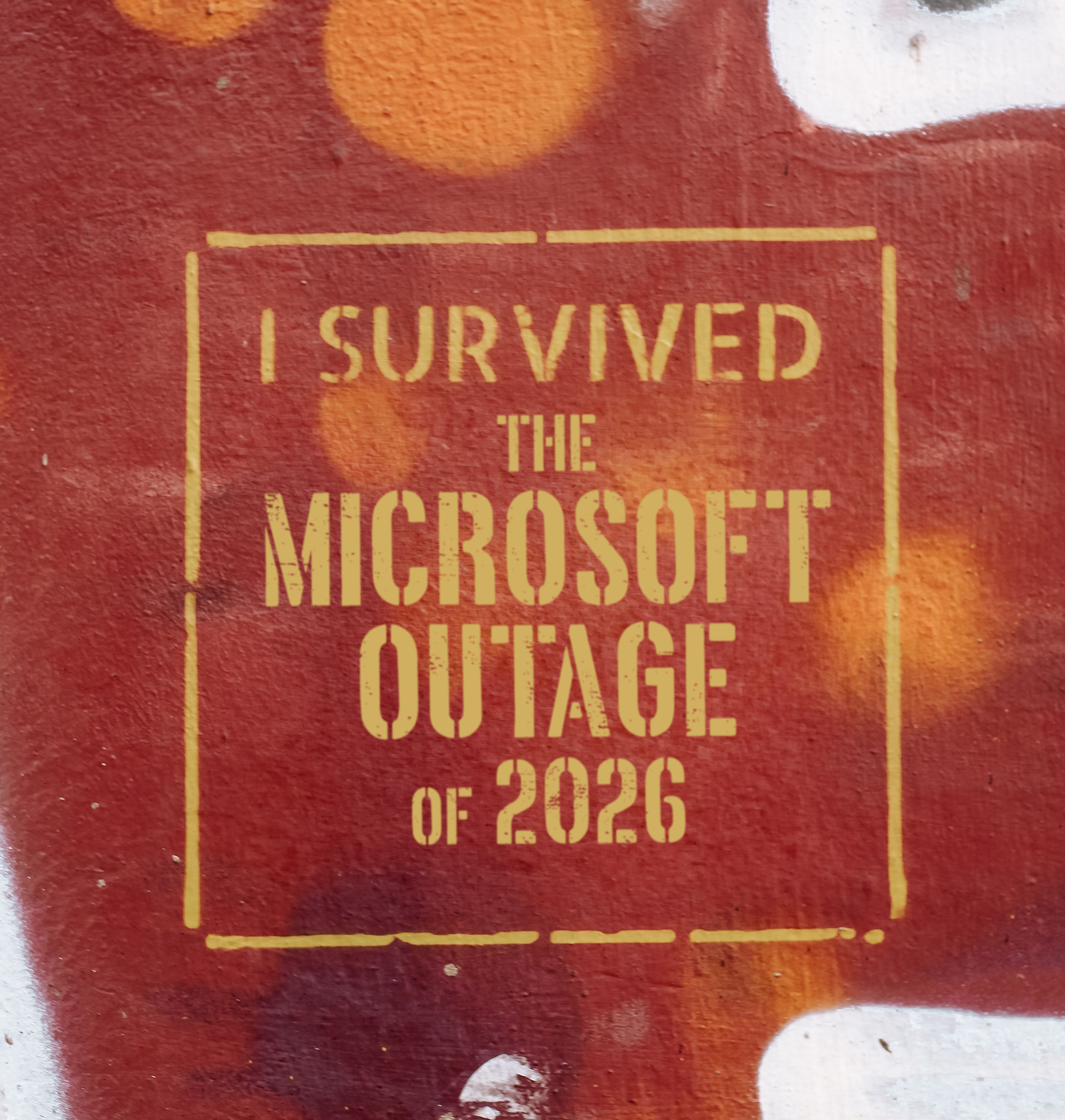
We all survived the recent global Microsoft outage. Whew.
As a freelance designer embedded in agency workflows, I’m well accustomed to rolling with the punches when digital infrastructure goes sideways. Lately, that means wrestling with a notoriously clunky remote virtual desktop environment for client work. This system routinely lags meetings, mutes audio at random, completely blocks copy-pasting across windows, and renders buggy PDFs. The true stress test happened recently during a hyper-fast turnaround project: a team member dropped a critical brief and assets into chat, but the secure sandbox policy blocked direct downloads. To even view the files clearly, I had to bounce them through an external email workaround. Now, imagine trying to execute real-time, live collaboration with team members on Asset Version 23 under those conditions. This involved me manually emailing files back and forth, holding my breath while waiting for firewall filters to clear just to tweak a single layer. To me, this proves that keeping a project moving requires as much creative problem-solving on the backend as it does on the artboard.
At the end of the day, these moments are a stark reminder that resilience and agility are the actual core job descriptions for a modern designer. Whether I’m dealing with a historic global tech blackout or just navigating the daily friction of glitchy corporate software constraints, the unexpected roadblocks are never an excuse to hit pause on design. Creativity so much more than pushing pixels. Being a designer means being a problem-solver who can design clever workarounds on the fly.