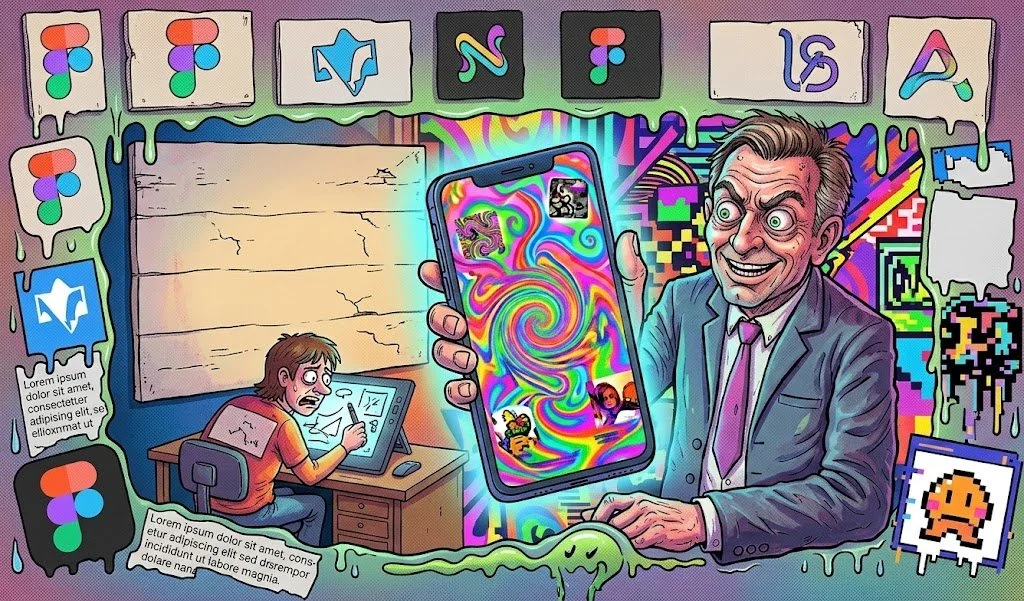
It’s 4:55 pm and I get an email from a client, open their latest attachment, and realize they handed me an entirely fabricated AI generation as their "final mockup." I can see the vision. But as a designer, it’s my job to actually look under the hood and ask the uncomfortable questions, like how a hallucinated asset is going to survive real-world usability testing or clear a basic regulatory audit.
Because I’m working in high-stakes, regulated spaces (especially pharma and healthcare) I know that playing fast and loose with AI-generated visual references is a fast track to a copyright lawsuit or a compliance nightmare. Algorithms don't care about intellectual property rights, industry compliance standards, or accessibility guidelines; they just mash pixels together. Trying to force a Frankenstein monster of prompts into a legally bulletproof, accessible interface is an art director's worst headache, and bridging that gap takes a lot more than just hitting "regenerate" on your Adobe Firefly account.
The magic of design expertise about translating that rough creative intent into a flexible, production-ready design system that can actually be brought to life. By steering the client away from a fragile, dead-end mockup and toward a modular, component-driven approach, we keep the project agile. At the end of the day, our job isn't to just blindly execute an AI pipe dream. Our job is often to protect our clients from risk while turning a messy concept into something smart, scalable, and legally sound.