Vima Therapeutics: Product launch site & accessible UI and UX
I designed and delivered Vima’s launch website on a compressed Oct–Dec schedule to meet time‑sensitive product and investor milestones. The site went live before Vima announced an expanded Series A (the company’s round grew from $60M to $100M; BioPharma Dive, Mar 11, 2026).
The challenge: translate complex neuroscience and clinical strategy into an accessible experience in time for critical investor and public milestones.
Vima had a barebones landing page, but now needed a credible site to help secure Series A funding. They needed to clearly convey the patient journey, the science behind the approach, and the company’s milestones, to better understand the disease, the need for new therapies, and how Vima’s work could translate into real-world movement improvement.
My solution: deliver a more confident, credible portrayal of Vima’s mission and progress.
Supporting the agency IQVIA, I led the UX and UI overhaul of the site to create a clear, patient-centered narrative and a scalable, investor-friendly experience. I collaborated closely with the Art Director to align illustration style, iconography, and user experience with the brand voice. I also worked with copywriters, project managers, developers, and client services to help bring this project to life.
The updated home page and supporting sections delivered a more confident, credible portrayal of Vima’s mission and progress. Overall, the new design elevates brand credibility and significantly improves accessibility and usability (especially for people with dystonia) without sacrificing the friendly, human tone of the Vima brand.
Date: October 2025 to March 2026
Key responsibilities: user experience, user interface, responsive design
Deliverables: design documentation, high fidelity mockups & prototypes
Live site: vimatx.com
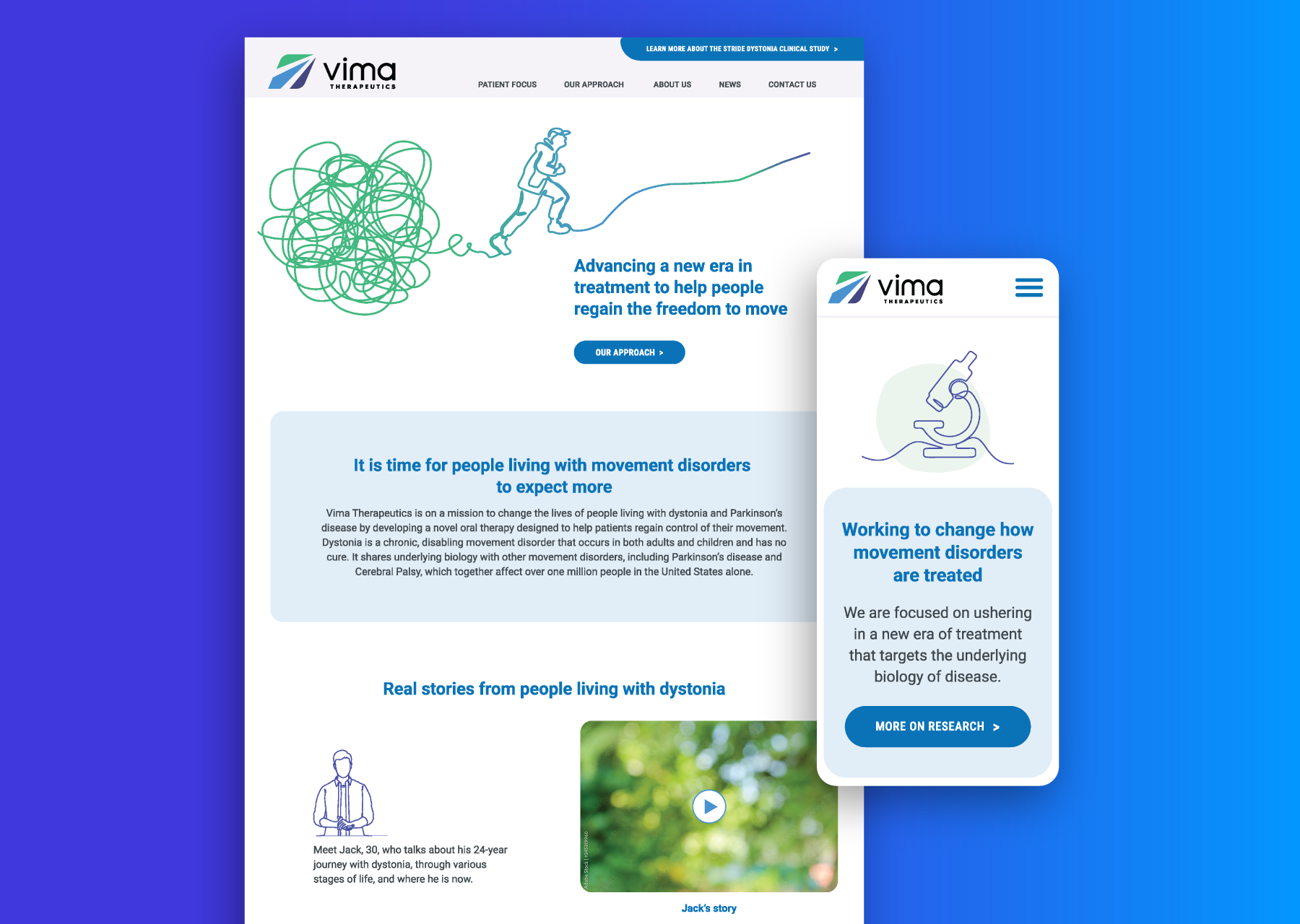
Prioritizing accessibility for patients with movement disorders
Throughout the project I advocated for accessibility considerations. I proposed larger buttons, generous line spacing, and bigger body text to support users with dystonia who may experience involuntary movements.
I also established clear, scannable sections with strong headings and descriptive CTAs so visitors could find clinical study details, resources, and company information with minimal effort.
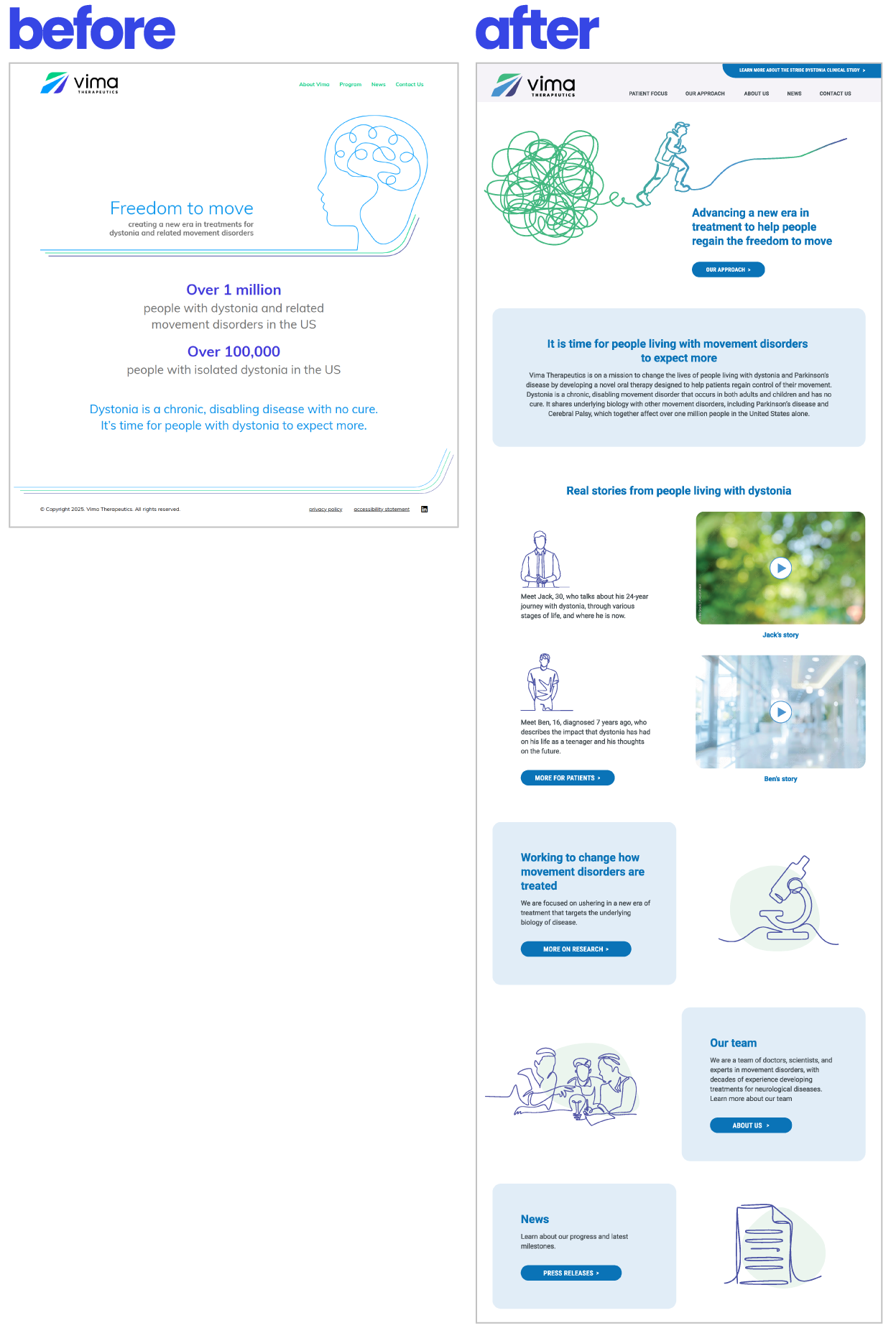
Before: barebones and hard to grasp the dystonia narrative
After: patient-focused, structured, and clear calls to action
A bold but approachable layout with visually distinct sections that highlight the Stride study, patient stories, and the Vima team. The hero conveys movement and hope, while the supporting blocks concisely present the disease context and calls to action.
Considerations included:
larger, high-contrast buttons for accessibility
easy-to-read card patterns for resources and news
simple page layouts that reduce cognitive load